Showing posts with label Google Nexus: News. Show all posts

Monday, 26 August 2013

Android 4.3 Announced and Rolling Out to Nexus Devices, Images Available

Android 4.3 Announced and Rolling Out to Nexus Devices, Images Available 

We were all expecting it. In fact, we’ve all been waiting for it ever since this year’s Google I/O. However, that conference came and went, without a trace of Android 4.3. But after last week’s Android 4.3 leak, we knew it was finally coming soon. And in today’s Google event, which also marked the release of the Nexus 7 refresh, it has finally been made official. So what’s new in this latest flavor of Jelly Bean? Here are some of the key changes, courtesy of the Android Developers blog post:
  • OpenGL ES 3.0 — Game developers can now take advantage of OpenGL ES 3.0 and EGL extensions as standard features of Android, with access from either framework or native APIs.
  • Bluetooth Smart — Now your apps can communicate with the many types of low-power Bluetooth Smart devices and sensors available today, to provide new features for fitness, medical, location, proximity, and more.
  • Restricted profiles — Tablet owners can create restricted profiles to limit access to apps, for family, friends, kiosks, and more. Your app can offer various types of restrictions to let tablet owners control its capabilities in each profile.
  • New media capabilities — A modular DRM framework enables media application developers to more easily integrate DRM into their own streaming protocols such as MPEG DASH. Apps can also access a built-in VP8 encoder from framework or native APIs for high-quality video capture.
  • Notification access — Your apps can now access and interact with the stream of status bar notifications as they are posted. You can display them in any way you want, including routing them to nearby Bluetooth devices, and you can update and dismiss notifications as needed.
  • Improved profiling tools — New tags in the Systrace tool and on-screen GPU profiling give you new ways to build great performance into your app.
Much has also been done to improve UI performance. Most notably, the Android 4.3 Platform Highlights page mentions a change to the hardware-accelerated 2D subsystem that modifies the stream of drawing commands to send the commands to the GPU in an optimized manner. And in instances when the CPU is required, these operations are now multi-threaded, allowing the use of multiple CPU cores. Improved window buffer allocation also speeds up buffer allocation, resulting in speedier rendering starts. And to best harness the GPU’s power in 2D hardware-accelerated tasks, the system now uses OpenGL ES 3.0 for optimized texture management and to maintain higher gradient rendering fidelity. Of course, however, the main use of OpenGL ES 3.0 will be to provide game developers with the framework and native API access they need to produce high quality and efficient games.
Another major highlight in this Jelly Bean refresh is a substantial refresh to the notification system, whereby third-party apps can observe the stream of notifications and display them or transfer them to nearby connected Bluetooth devices. And just as before, notifications can be enabled or disabled per app. Building upon this, however, now users are allowed to see and toggle which apps have access to the notification stream.
The tablet multi-user feature has also been revamped. Now in 4.3, users are given the option to set up restricted profiles. This allows owners to easily create separate environments for each user, with the ability to manage restrictions in apps available in those environments. This feature is aimed to sharing your device with friends and use at kiosks.
Other notable changes include Bluetooth Smart Ready to aid in discovery and communication with nearby devices, Bluetooth AVRCP 1.3 support for richer interactions with media streaming devices, an improved DRM framework, and a VP8 video encoder.
You can learn more by heading over to the Android Developers blog post and Android 4.3 Platform Highlights page. If you’re lucky enough to own a Google Nexus 4, Nexus 7, Nexus 10, or Galaxy Nexus, you can expect this update to come over-the-air shortly. And if you find yourself impatiently waiting, you can get a head start and download the images by visiting the Nexus device factory images.
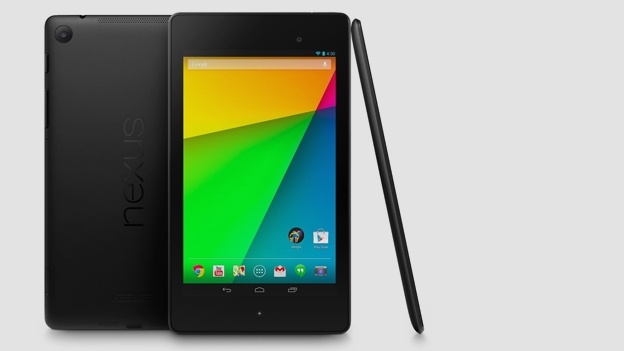
New Nexus 7 Factory Images Not Available; JBQ Leaves AOSP

New Nexus 7 Factory Images Not Available; JBQ Leaves AOSP
Now that’s a doozy, isn’t it? Before proceeding, let’s take a moment for that to better sink in. In addition to support from the AOSP, one of the hallmarks of the Nexus program has traditionally been the availability of factory restore images. This is more than a simple convenience for Nexus device owners. Rather, it allows for users to safely and reliably restore their devices to their factory state.
As a result of the availability of factory restore images, Nexus device owners always had a safety net available for when (not “if” here at XDA) they decide to leave the confines of stock software and venture into the realm of aftermarket development. And the loading of unsupported firmware was always a relatively supported task, as evidenced by the availability of the simple command fastboot oem unlock.
There have been minor inconveniences along the way, however, as exemplified by the Nexus One and Nexus 4 factory images. Ultimately, these issues were all resolved in some way or another. For the Nexus One, HTC was able to release factory images. And for the Nexus 4, Google released the images after some time had passed. However one thing links these devices, along with the new Nexus 7 (2013): Qualcomm.
As a quick refresher, the Nexus One used the original Snapdragon system-on-a-chip with a single core Scorpion CPU mated to an Adreno 200 GPU. The Nexus 4 uses the Snapdragon S4 Pro, which features four Krait CPUs and an Adreno 320 GPU. Finally, the Nexus 7 uses a potentially lower-binned Snapdragon 600, which has been relabeled as an S4 Pro. And coincidentally, all of these devices have faced significant setbacks in their factory image availability.
The suspicions of Qualcomm’s intrusion into the procedure were then confirmed by the former technical lead of the AOSP, Jean-Baptiste Queru, when he wrote the following on Google+:
 Well, I see that people have figured out why I’m quitting AOSP.
There’s no point being the maintainer of an Operating System that can’t boot to the home screen on its flagship device for lack of GPU support, especially when I’m getting the blame for something that I don’t have authority to fix myself and that I had anticipated and escalated more than 6 months ahead.
While this was the most clearly the issue has thus far been stated, his followers knew something was amiss ever since JBQ tweeted on the matter back on July 30th:
That feeling when lawyers sabotage the launch you spent 6 months working on? I haz it. Sad sad sad sad sad sad.
The bottom line of the factory image drama is simple: We currently have no officially supported way to factory restore our Nexus devices. We don’t know if this will be solved by Google and Qualcomm like it was for the Nexus 4, or if this will remain a longer-standing issue requiring the intervention of an OEM partner, as was the case with the Nexus One. And finally, this forced the man ultimately in charge of the technical side of the Android Open Source Project to resign.
Luckily, there are options available for users looking to restore their factory firmware, thanks to XDA Senior Member ATGAdmin who released a factory restore package for users in need. In fact, a certain editor-in-chief of a certain mobile development forum’s news site already had to make use of such accommodations after some late-night flashing without adequate precautions left him with an unusable slab. However, these images are unsupported, and it would ultimately be better if they were to come from Google themselves.
Because of this issue, and past issues like it, the future direction of the Android Open Source Project is unfortunately all too nebulous. It’s times like these that we’re grateful that other open source options are beginning to emerge.

Twitter Delicious Facebook Digg Stumbleupon Favorites More

 
Powered by Blogger